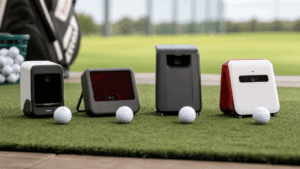
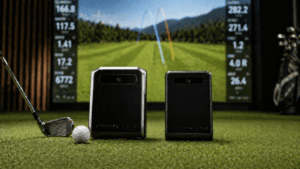
The sub-$1,000 launch monitor category barely existed five years ago. The Garmin R10 created it in 2021, and by 2026, six legitimately useful devices compete in this bracket. The accuracy gap between a $699 unit and a $5,000 one is real but far smaller than the price gap, and for the vast majority of golfers working on their game, the data from these devices is more than enough to drive real improvement.
I’ve tested every unit on this list against a Trackman 4 reference using a 50-shot protocol across driver, 7-iron, and wedge. I score on accuracy (carry deviation, spin consistency, missed-shot rate), data richness (measured vs. calculated metrics), software compatibility (GSPro, E6, native apps), and total cost of ownership including mandatory subscriptions.
At this price, the core decision is between radar units (Garmin R10, SC4 Pro, SC300i) that work best outdoors and need 14+ feet indoors, camera-based units (Square Golf) that excel in tight indoor bays, and hybrid camera-radar units (Rapsodo MLM2PRO) that try to do both. Each has genuine trade-offs that depend on where you’ll actually hit balls.
Our top picks at a glance
- Best overall: Rapsodo MLM2PRO, the most accurate unit under $1K with measured spin, club path, and swing video
- Best for tight rooms: Square Golf, the only photometric unit under $1K, works in 10-foot rooms, no subscription
- Best value: Garmin Approach R10, the widest software ecosystem at $599 with zero mandatory fees
Side-by-side comparison
| # | Launch monitor | Score | Tech | Measured metrics | Price |
|---|---|---|---|---|---|
| 1 | Rapsodo MLM2PRO | 9.0 | Camera + radar | 13 | $699 |
| 2 | Square Golf | 8.8 | Camera | 12+ | $699 |
| 3 | Garmin Approach R10 | 8.5 | Radar | 14 | $599 |
| 4 | Swing Caddie SC4 Pro | 8.2 | Radar | 10+ | $599 |
| 5 | Swing Caddie SC300i | 7.8 | Radar | 6 | $399 |
| 6 | Shot Scope LM1 | 7.2 | Radar | 5 | $199 |
“Measured metrics” counts directly measured data points, not algorithmically calculated ones. The distinction matters because calculated spin on budget radar units is less reliable than camera-measured spin.
The 6 best launch monitors under $1,000 in 2026
1. Rapsodo MLM2PRO, the most accurate unit under $1K
The Rapsodo MLM2PRO at $699 earned the top spot because it’s the only sub-$1,000 launch monitor that directly measures spin rate and spin axis through its dual-camera Impact Vision system rather than calculating them from radar data. That distinction matters: calculated spin from budget radar units can deviate by 500-1,000 rpm from reality, while the MLM2PRO’s camera-measured spin tracks within 200-300 rpm of the Trackman 4 baseline.
The unit combines dual optical cameras with Doppler radar, captures 13 directly measured metrics including club path and angle of attack, and records swing video from two angles at 240 fps. For a player trying to understand why their ball curves rather than just how far it goes, the swing video paired with measured club path data is a combination no other sub-$1K device matches.
The MLM2PRO connects to GSPro through an official integration, works both indoors and at the range, and weighs 0.7 lbs. The trade-offs: the $199/year Premium Membership (or $499 lifetime) is required for full features, RPT balls ($35-$50/dozen) are needed for optimal spin reads, and radar units need at least 14 feet of room depth indoors.
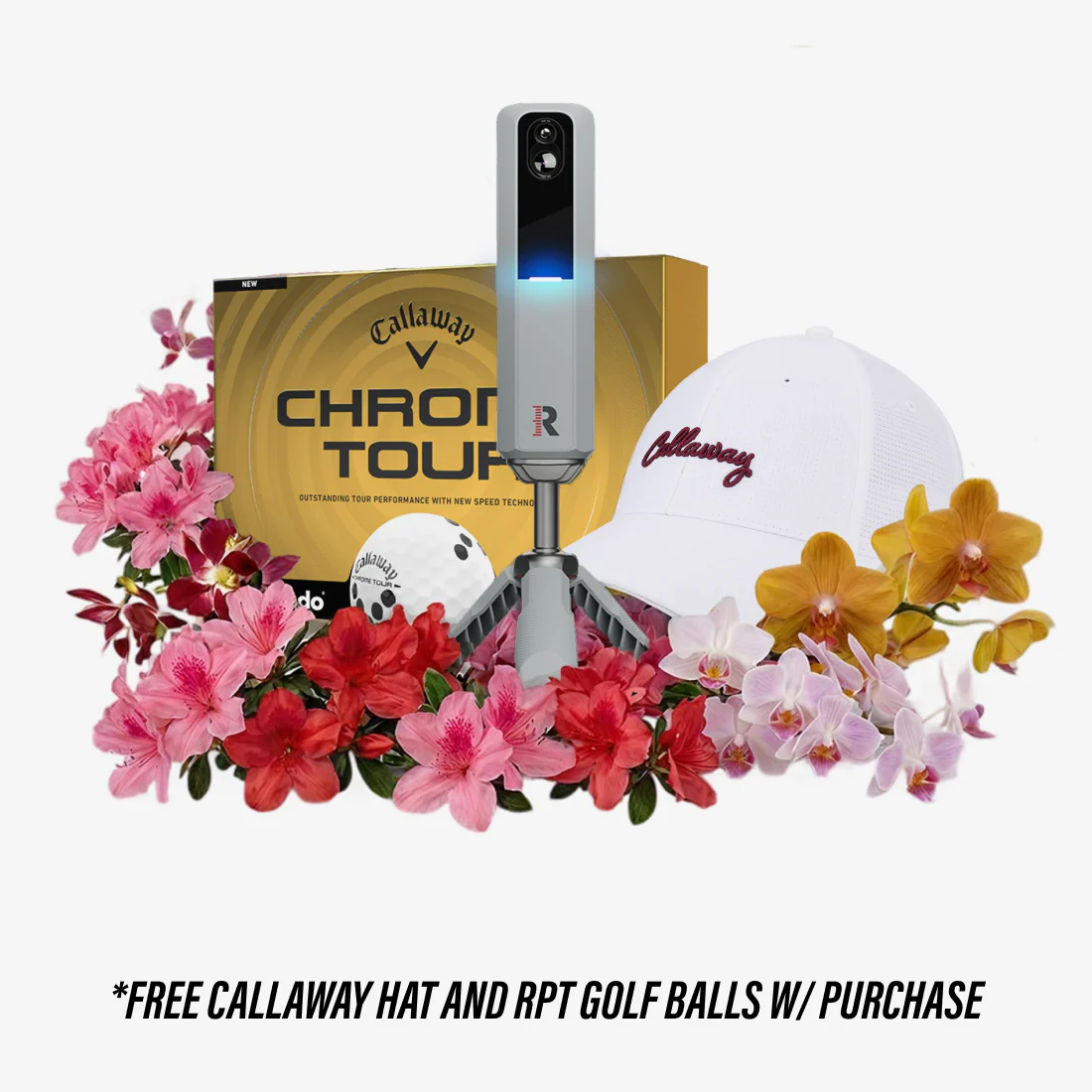
The MLM2PRO is the only sub-$1K unit where the spin data is genuinely trustworthy. Dual cameras measuring spin directly, plus club path, swing video, and official GSPro, all in a device that fits in your pocket. The $199/year subscription is the only real drawback, and the $499 lifetime option eliminates it for serious owners.
Built for
- Players who want measured spin data, not calculated estimates
- Indoor and outdoor practice in one device
- Golfers who learn visually through swing video replay
Not ideal for
- Tight basements under 14 feet of depth
- Buyers who want zero ongoing costs
2. Square Golf, the only photometric unit under $1,000
The Square Golf at $699 is the launch monitor that shouldn’t exist at this price. It uses photometric (high-speed camera) technology to capture ball data at impact, the same approach Foresight and Bushnell use in units costing $2,500-$14,000. The camera reads spin directly from the ball surface rather than estimating it from radar flight data, which gives it an accuracy advantage on short game shots that every radar competitor misses.
Square tracks full swings, chipping, and putting in rooms as shallow as 10 feet of total depth. The putting tracking with adjustable green speeds is a genuinely unique feature at this price and makes the Square the only sub-$1K unit that covers the full scoring game. It connects to GSPro, E6, and Awesome Golf with no annual subscription from Square, which makes its three-year total cost the lowest on this list.
The trade-offs are clear: indoor-only (direct sunlight disrupts the cameras), club marking stickers are required for full club data, and left-right players need to reposition the unit. The occasional missed shot (~1 in 10 in testing) is the other knock, though data quality on captured shots is excellent.
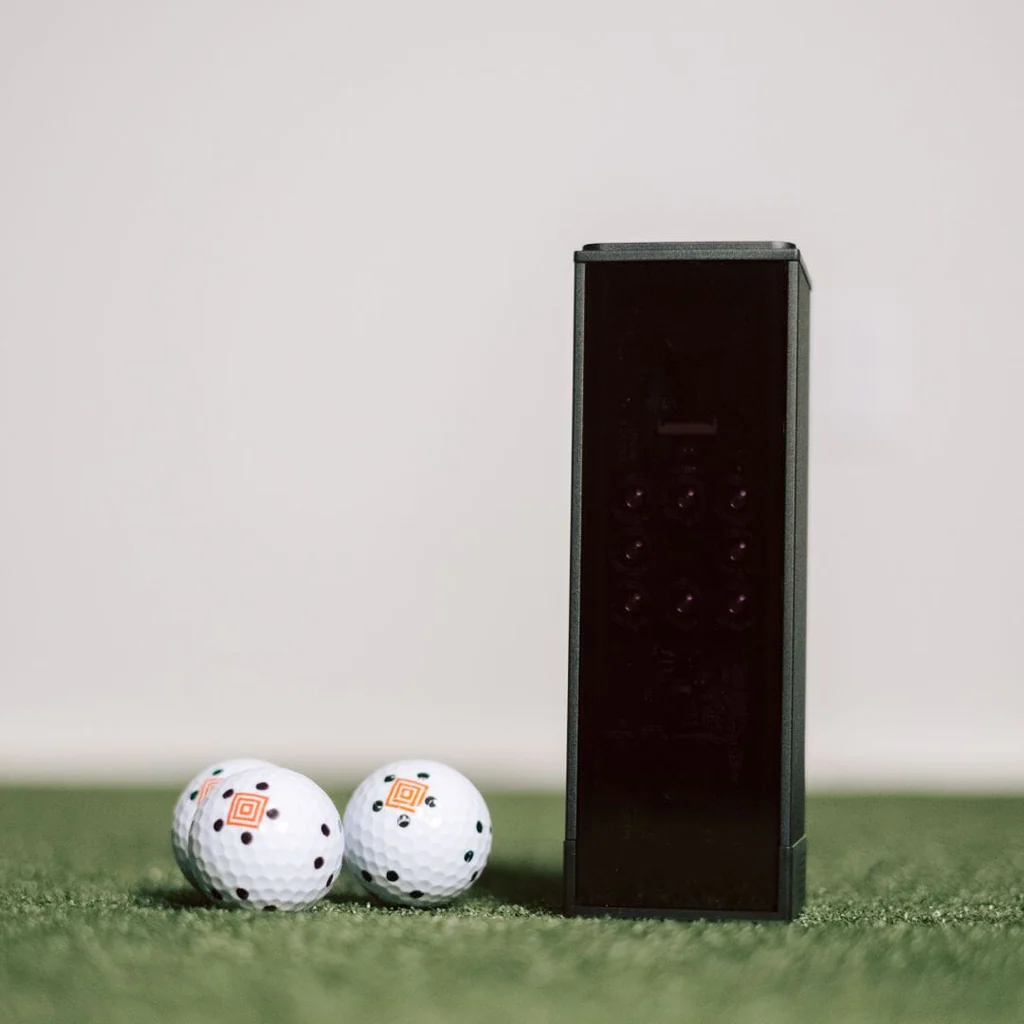
A photometric launch monitor with direct spin measurement, putting tracking, and native GSPro for $699 with zero ongoing fees. If your room is under 14 feet deep, this is the only sub-$1K unit that actually fits and delivers trustworthy data on every club including wedges.
Best fit
- Tight indoor bays from 10 feet of depth
- Players who want putting and short game tracked
- Anyone who refuses to pay annual software fees
Not ideal for
- Outdoor range use
- Mixed left-right households without repositioning
3. Garmin Approach R10, the widest software ecosystem at $599
The Garmin R10 at $599 is the launch monitor that built this entire market category in 2021. Five years later, newer competitors beat it on individual specs, but no other sub-$600 unit matches its software ecosystem: native GSPro, E6 Connect with 5 free courses, TGC 2019 compatibility, and Home Tee Hero with 43,000+ simulated courses through the Garmin Golf app. If you’re already in the Garmin ecosystem with CT10 sensors or a golf watch, everything syncs automatically.
In testing, the R10 tracks driver carry within 3-5 yards of the Trackman 4 in properly sized spaces. It provides 14 data parameters including ball speed, carry, total distance, launch angle, spin rate, and club head speed. Spin is calculated (not directly measured), which means the spin numbers are useful for trends but shouldn’t be trusted to the exact rpm on wedge shots. For full-swing data at the range, the R10 remains the smartest $599 in golf.
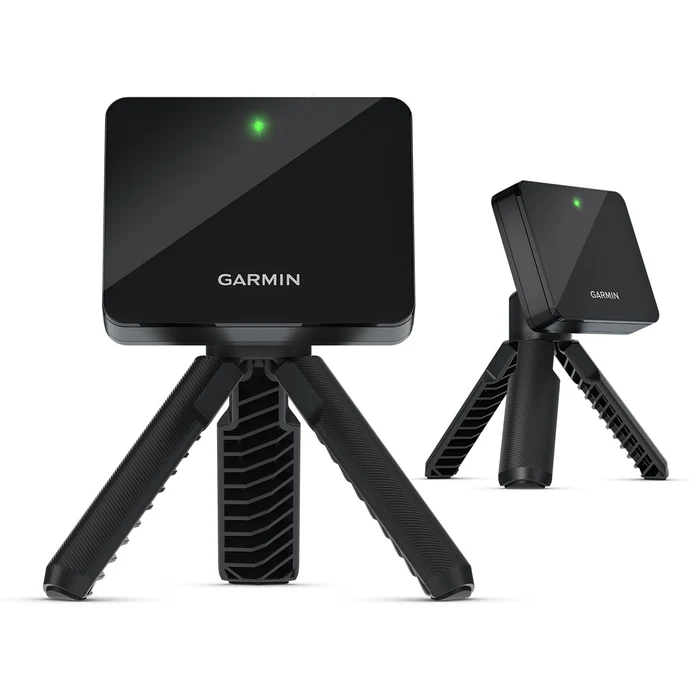
The R10 is still the best first launch monitor for most golfers. The software ecosystem is unmatched at $599, the reliability is proven over five years, and the zero-subscription model means your first-year cost is your only cost. Newer units beat it on accuracy, but none match its breadth.
Built for
- First-time launch monitor buyers
- Garmin ecosystem users with watches and CT10 sensors
- Outdoor range sessions and net-based indoor practice
Not ideal for
- Tight indoor bays under 14 feet
- Players who need directly measured spin data
4. Swing Caddie SC4 Pro, built-in screen with zero phone dependency
The Swing Caddie SC4 Pro at $599 is the pick for golfers who want launch monitor data without touching their phone. It has a built-in display that shows carry, ball speed, swing speed, launch angle, and smash factor directly on the unit, plus voice output that calls your distance after every shot and a magnetic remote control for switching clubs and modes from the hitting position.
The SC4 Pro uses Voice Caddie’s ProMetrics engine for ball and club data, includes 5 free E6 Connect courses, and connects to the VoiceCaddie S app for session history and 3D range visualization. In testing, it tracks full-swing carry within 3-4 yards of the Trackman 4 baseline. No mandatory subscription makes its total cost of ownership identical to the sticker price.
5. Swing Caddie SC300i, the cheapest launch monitor with a built-in screen
The Swing Caddie SC300i at $399 is the budget pick for players who want pure range data without an app, a tablet, or a subscription. It’s a Doppler radar unit with a built-in display showing carry distance, ball speed, swing speed, launch angle, smash factor, and apex height directly on the unit. Voice output reads your distance after every shot.
The SC300i doesn’t do simulator course play, swing video, or club path data. What it does is deliver accurate full-swing data that tracks within 4-5 yards of carry against the Trackman 4 baseline. For practice focused on dialing in distances and gapping clubs, it’s the best data-per-dollar under $400.
6. Shot Scope LM1, the $199 entry point that actually works
The Shot Scope LM1 at $199 is the cheapest legitimate launch monitor on the market, released in early 2026. It tracks five metrics: carry distance, total distance, ball speed, club speed, and smash factor. A built-in 3.5-inch color screen displays numbers without needing a phone. No simulator compatibility, no spin data, no subscription.
For the golfer who just wants to know how far they actually hit each club, the LM1 delivers exactly that for less than a green fee at a decent course. The Shot Scope app syncs session history optionally. Pair it with range sessions to build a real yardage book based on your actual distances, not what the club says on the bottom.
The single most important distinction in this price tier is measured vs. calculated spin. The MLM2PRO and Square directly measure spin with cameras. The R10, SC4 Pro, SC300i, and LM1 calculate spin from radar flight data. Calculated spin is useful for trends but unreliable on individual shots, especially wedges. If spin data matters to your practice, camera-based is the only option.
How we test launch monitors under $1,000
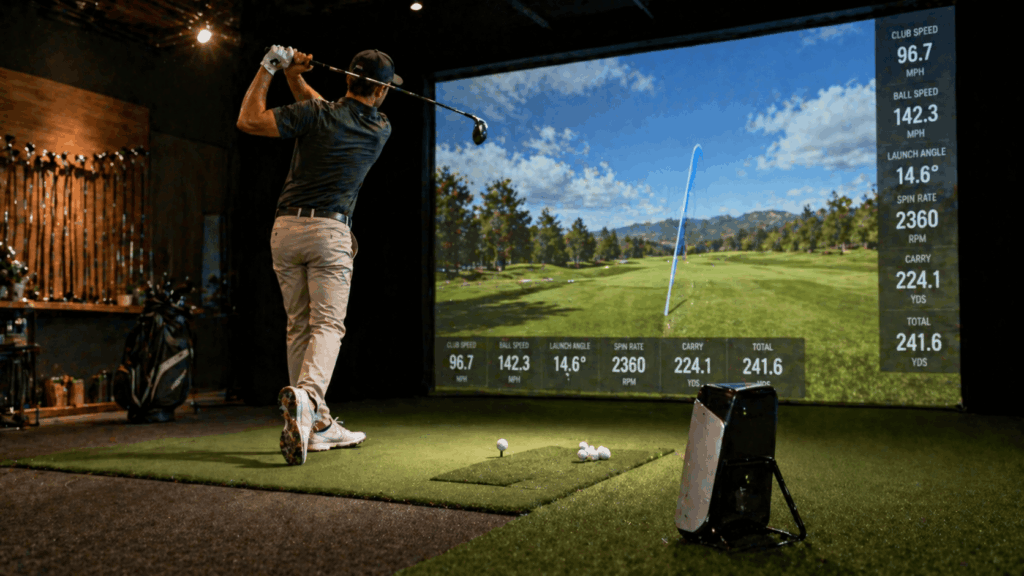
Every unit runs the same 50-shot protocol against a Trackman 4 reference: 20 driver, 20 7-iron, 10 wedge. I record carry deviation, spin consistency, and missed-shot rate. For this tier, I also distinguish between directly measured and algorithmically calculated metrics, because the difference between the two is the single biggest quality gap between budget and premium launch monitors.
Testing protocol: 50 shots per unit (driver, 7-iron, wedge) vs Trackman 4. Carry within 5 yards = pass. Directly measured spin within 300 rpm = pass. Calculated spin is noted but not scored against the same tolerance.
Measured vs. calculated: the data quality gap under $1,000
At $5,000+, every metric on your screen is directly measured by high-speed cameras or radar. At $699 and below, some metrics are measured and some are calculated using algorithms. The distinction matters because calculated values can deviate significantly from reality, especially on partial and wedge shots.
Directly measured on every unit: ball speed, carry distance, total distance. These are reliable across the board, even on the $199 LM1. Directly measured only on camera units (MLM2PRO, Square): spin rate, spin axis. Calculated on radar units (R10, SC4 Pro, SC300i, LM1): spin rate (estimated from ball flight arc), club path (estimated from ball curve). The R10’s spin numbers are useful for seeing trends across sessions but shouldn’t be trusted to the exact rpm on any single shot.
The community consensus on r/golfsimulator is consistent: if spin accuracy matters for your practice (fitting work, wedge gapping, understanding ball flight shape), camera-based is the only real option under $1,000. If you just want carry distances and ball speed for general practice, radar is perfectly fine.
Launch monitor under $1,000 FAQ
What’s the most accurate launch monitor under $1,000?
The Rapsodo MLM2PRO is the most accurate overall thanks to its dual-camera system that directly measures spin. The Square Golf is the most accurate for indoor use in tight spaces, and its putting tracking adds a dimension no other sub-$1K unit offers. Both consistently track within 3-4 yards of carry against a Trackman 4.
Is measured spin really that different from calculated spin?
Yes. Calculated spin from radar units can deviate by 500-1,000 rpm from directly measured values, especially on wedge shots and partial swings where the ball flight arc is shorter. For full-driver swings, the gap is smaller (~200-400 rpm). If you’re doing wedge gapping or fitting work, measured spin from a camera-based unit is worth the difference.
Camera or radar under $1,000?
Camera (Square) for rooms under 14 feet, putting tracking, and zero subscriptions. Radar (R10, SC4 Pro) for outdoor range use and bigger garages. Hybrid (MLM2PRO) for the best accuracy across both environments. The community consensus is clear: camera beats radar indoors for accuracy, radar beats camera outdoors for flexibility.
Do I need to pay for GSPro separately?
GSPro is a separate $250/year subscription from the launch monitor itself. The R10, MLM2PRO, and Square all connect to GSPro natively. The SC4 Pro has its own E6 courses. The SC300i and LM1 don’t support simulator software. GSPro is optional for practice, but the 4,000+ course library and Sim Golf Tour make it the community standard for course play.
Should I save up for a more expensive launch monitor?
Maybe. The next serious tier starts at the Bushnell Launch Pro at $2,499, which uses the same Foresight photometric engine as units costing $7,000+. The accuracy jump from $699 to $2,499 is real but smaller than the price gap. For most home golfers, a sub-$1K launch monitor is the smarter starting point, and you can always upgrade the unit later while keeping your enclosure, mat, and software.
The bottom line on launch monitors under $1,000
The accuracy gap between a $699 MLM2PRO and a $7,000 Foresight GC3 is measurable but much smaller than the price suggests. For 90% of home golfers working on their game, the data from these sub-$1K units is more than enough to identify real patterns, dial in distances, and track improvement over time. The technology is no longer the bottleneck; your practice routine is.
If measured spin and swing video matter to your practice, buy the Rapsodo MLM2PRO. If your room is tight and subscriptions feel like a tax, buy the Square Golf. If you want the widest software ecosystem at the lowest price with proven reliability, buy the Garmin R10. You can find the Rapsodo MLM2PRO directly on Rapsodo.